
Why Cheap PP Woven Bags Cost More: The Hidden Costs Behind Low-Cost Packaging

Introduction
If your packaging bill keeps climbing even though your per-bag price hasn't changed, the price tag isn't the problem — the total cost is. Cheaper bags often shift cost from the invoice to somewhere less visible: product loss, rejected shipments, extra labor, and damaged relationships with your own customers. These costs rarely show up in a single line item, which is exactly why they go unnoticed until margins start shrinking for reasons that seem to have no clear cause. This blog breaks down the hidden cost drivers behind "cheap" packaging and gives you a simple framework to calculate what your bags are really costing you.

1. The Real Meaning of "Packaging Cost"
Per-Bag Price vs Total Cost of Ownership
The price per bag is only one input. Total cost of ownership includes every rupee spent because a bag underperformed — from wasted product to the labor spent fixing the problem.
Why This Gap Goes Unnoticed
These costs are usually recorded under different budget heads (logistics, quality, customer service), so no one connects them back to the packaging decision that caused them.
2. Cost Driver: Product Loss from Bag Failure
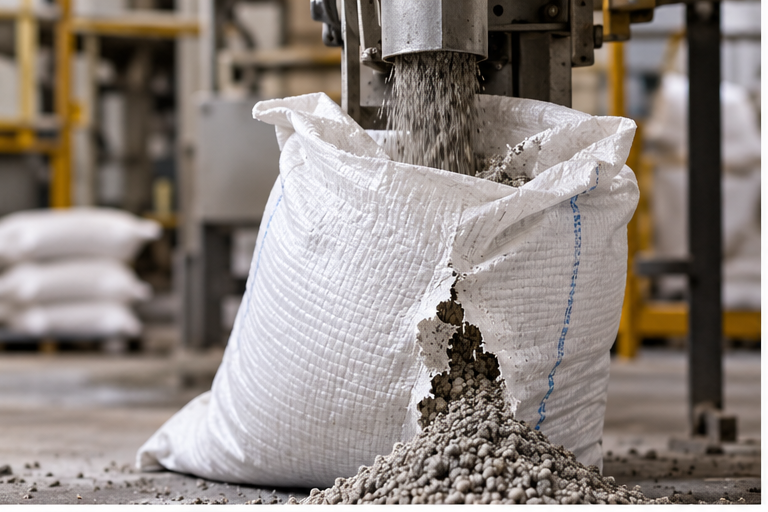
A torn or burst bag doesn't just cost the bag — it costs the entire product inside it, plus the cleanup. For high-value contents like chemicals or fertilizers, this loss alone can exceed the entire packaging budget for that shipment.
3. Cost Driver: Rejected Shipments & Customer Claims
Bags that fail after dispatch trigger claims, replacement shipments, and sometimes contractual penalties. Each rejected shipment also consumes staff time to investigate and resolve.

4. Cost Driver: Extra Handling, Repacking & Labor
Weak bags often need double-handling — reinforced pallets, extra strapping, slower forklift operation, or manual repacking before dispatch — all of which add labor cost that never appears on the packaging invoice.
5. Cost Driver: Logistics Inefficiency
Bags that lose shape or slump under load waste container and pallet space, meaning you ship fewer units per container and pay more in freight per unit delivered — a cost with nothing to do with the bag's purchase price.

6. Cost Driver: Brand and Relationship Damage
Harder to quantify but very real: a customer who receives a damaged shipment remembers it, and repeat issues push buyers toward competitors, regardless of how competitive your product pricing is.
7. A Simple Framework to Calculate True Packaging Cost
Add: bag price + average product loss per shipment + claims/rejection cost + extra labor hours (in cost) + freight inefficiency from poor space utilization. Compare this total across suppliers, not the invoice price alone.
Key Benefits of Looking at Total Cost
Reveals which supplier is actually cheaper over a full year
Identifies avoidable losses hidden in other departments' budgets
Supports better long-term supplier negotiations
Reduces customer complaints and repeat shipment issues
Improves overall margin without renegotiating unit prices
Applications
This framework applies to any bulk packaging decision — cement, fertilizer, chemical, sugar, and grain bags, as well as FIBC and leno bags — anywhere bag performance directly affects product integrity during transit and storage.
Why Choose Formosa Synthetics
Formosa Synthetics builds bags to perform through the full supply chain, not just to meet a price point. With ISO and BRC Packaging certification, controlled raw material sourcing, and in-house testing across our 135,000 sq. ft. facility, we help clients reduce the hidden costs of packaging failure — backed by consistent quality across 28+ export markets and a support team that responds when it matters.

Conclusion
The cheapest bag on paper is rarely the cheapest bag in practice. When you add up product loss, claims, labor, and logistics inefficiency, a slightly higher unit price often delivers a lower total cost. Before your next order, calculate the full picture — not just the invoice.
FAQs
1. How do I know if my packaging costs are hidden rather than obvious?If your logistics, claims, or labor costs are rising while bag prices stay flat, hidden packaging costs are a likely factor worth auditing.
2. Is a more expensive bag always the better total-cost option?Not automatically — but it often is, because failure-related costs (product loss, claims, rework) usually outweigh a modest price difference per bag.
3. What's the easiest way to start tracking hidden packaging costs?Log every bag-related claim, rejection, and repacking incident for a quarter, then total the associated cost against your packaging spend for that period.
4. Can better bag specification really reduce freight costs?Yes — bags that hold their shape use container and pallet space more efficiently, which can meaningfully reduce cost per unit shipped.
5. How often should I review total packaging cost, not just price?At minimum once a year, or any time you notice a rise in claims, rejections, or logistics costs that isn't explained by other factors.


Comments